2026-09-11
European Heritage Days 2026 in Bordeaux
On 19 and 20 September 2026, Bordeaux opens more than 150 places, including six private mansions rarely open, from the prefect's residence to a Victorian manor. BARNES Bordeaux has kept the addresses, the opening times and the free slots.
The European Heritage Days 2026 in Bordeaux take place on Saturday 19 and Sunday 20 September, and the City lists more than 150 events for this 43rd edition. The French Ministry of Culture has chosen the theme "Heritage at Risk", shared by some fifty European countries, and its three watchwords are revive, resist and reimagine. Photography has a theme of its own this year, two hundred years after its invention. Since 2021, Bordeaux has called the event the "Journées du patrimoine et du matrimoine", coining matrimoine against patrimoine so as to include the legacy left by women.
The theme could hardly fit the city better. When it joined the UNESCO World Heritage list in 2007, Bordeaux counted 347 protected historic buildings, more than any other French city apart from Paris. A collection that size only stays standing through constant work. The 2026 programme opens up residences still occupied by the prefecture, the education authority or an appeal court. It also unlocks community venues given back to the city, and the top of a spire that spent five years under scaffolding.
The private mansions of Bordeaux that open for a single weekend
A word on the name first, since it trips up most visitors. In Bordeaux an hôtel particulier is a grand private townhouse, never a place to spend the night, and the mansions below all carry the label. The Hôtel de Nesmond, at 17 bis rue Vital-Carles, opens free of charge on Saturday 19 September, from 10am to noon and from 2pm to 6pm, with no booking needed. Built in the 17th century, it housed the governors of Guyenne, the old province around Bordeaux, before the Revolution. It then passed to the Archbishop of Bordeaux under Napoleon III, before becoming in 1907 the residence of the prefects of the Gironde, the State's senior representatives in the department. The French government sat here twice, in 1914 and in 1940, and several presidents stayed within its walls, from Raymond Poincaré to General de Gaulle.
The education authority also opens its doors to you, on Saturday at 10am, at the Hôtel de Poissac on cours d'Albret, a place usually closed to the public. Built in 1775 by the architect Nicolas Papon for the Baron de Poissac, it has been a protected monument since 1930. Its street gateway comes from another 17th-century mansion and was dismantled and rebuilt here in 1903. The tour, led by a volunteer guide, continues as far as the office of the rector, head of the regional education authority.
On rue du Mirail, the Hôtel Leberthon has housed the Crédit Municipal de Bordeaux since 1801 and opens on Saturday from 10am to 5.30pm. An exhibition traces the history of the pawnbroking institution, and you can have jewellery, paintings and wine valued free of charge, without an appointment. André Portier rebuilt it after a fire, between 1742 and 1747, for the first president of the Parlement de Bordeaux. That body was the regional high court of the day, not a legislature, and the building received a personal contribution from Louis XV.
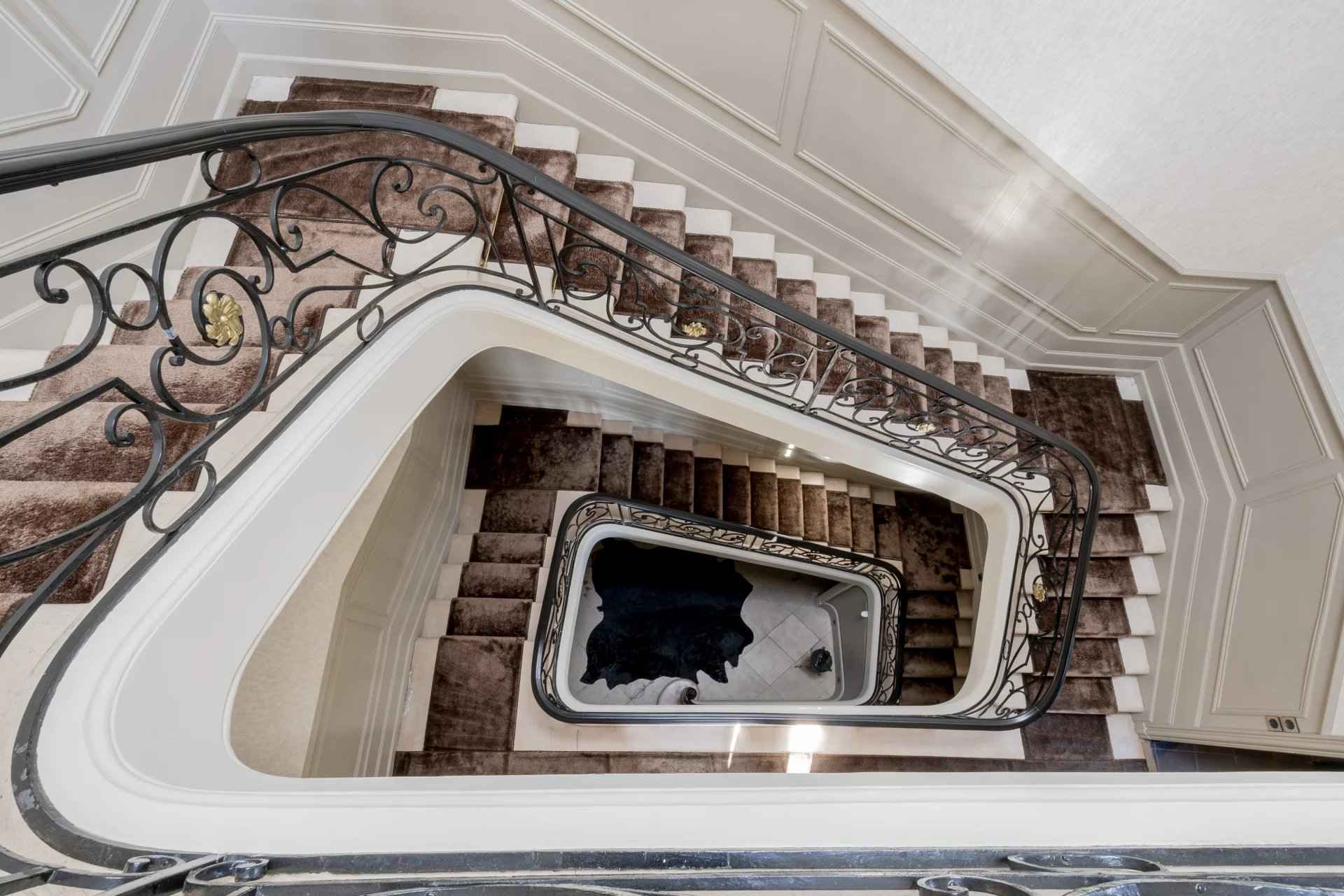
On Sunday at 10am, the administrative court of appeal opens the Hôtel de Nairac to you at 17 cours de Verdun. Paul Nairac, a merchant enriched by commerce and the slave trade, commissioned it in 1770 from Victor Louis, the architect of the Grand Théâtre. Laid out between courtyard and garden behind a restrained façade, it saves its surprise for a grand staircase designed to impress. Booking goes through the Pétronille association, a local heritage society running five departures that Sunday between 10am and 4.30pm. The court has occupied the fully restored building since 1999.
The same association guides visitors on Saturday through the Hôtel de la Marine at 9 place de Tourny, across six hour-long tours between 9.30am and 4pm. Richard-François Bonfin built it from 1758 for a religious school, but the barely finished building was handed by the City to the Royal Navy to settle the City's debts. The façade, which follows the curve of the square, was left untouched. The Choiseul salon, with its 18th-century panelling and medallions, is the highlight of the tour, while the exterior is undergoing renovation.
A private residence completes this institutional circuit. The Hôtel Exshaw, at 8 rue Théodore-Gardère, a neo-Victorian manor with bow windows, bears witness to the Anglomania that swept through the great merchant families of Bordeaux in the late 19th century. It opens on Sunday at 9.30am, 10.45am and noon, with booking through the Musée d'Aquitaine, the city history museum, whose calendar opened on 1 September. These six houses can only be visited on these two days, and their capacity remains limited, which is exactly what makes the weekend worthwhile.
The other Bordeaux places worth pushing open this weekend
The Saint-Michel spire, 114 metres high, is the most spectacular opening of the weekend. Closed to the public since November 2021, it reopened on 13 June 2026 at the end of the third and final phase of works begun in 2017. Its 230 steps take you to a terrace 47 metres above the ground, where the view takes in the Garonne and the rooftops of the district.
The restoration cost 11.3 million euros, funded by the State, the City of Bordeaux and the Nouvelle-Aquitaine Region, under Michel Goutal, chief architect of historic monuments. On the other side of the centre, the Palais Gallien, the last Roman remains in the city and protected since the first list of 1840, is still waiting for its own works. In spring 2026 the City suspended visits to the amphitheatre pending the consolidation of its walls, and the music festival planned among the ruins in July was cancelled. This weekend is no exception, as no visit appears in the programme and the ruins can only be seen from the street.
The Piscine Judaïque Jean Boiteux, at 164 rue Judaïque, shows what a restoration carried through to the end can produce. Designed by Louis Madeline and inaugurated in 1934, it has been a listed monument since 1996. It reopened on 31 August 2026 after more than three years of works costing fifteen million euros, according to the City of Bordeaux. Its tour is not part of the weekend programme, the City having placed it in its autumn heritage season instead, with slots on 5 October and 9 November, by booking and in small groups.
Two houses given back to the city by private or community restoration round off this circuit. In Caudéran, the Maison Hôtentique, at 83 boulevard du Président-Wilson, opens its reception rooms on Saturday and shows off its stained glass by the Chauffrey workshops. On rue Paul-Louis-Lande, the Hôtel Victoria, built between 1787 and 1791 for a merchant from the Portuguese Jewish community, has housed young workers since its rehabilitation in 2019 and can be visited on Sunday from 10am.
Also in Caudéran, the Glacières de la banlieue, at 121 avenue Alsace-Lorraine, stored blocks of ice from 1909 in a 500-square-metre shed that nothing betrays from the street. Closed in 1989, they now house the Groupe des Cinq association, which marks its fortieth anniversary with the exhibition "Habiter l'archive", and you walk in free of charge from 18 to 20 September. Not far away, the church of Saint-Amand offers you a climb up its restored bell tower, whose spire was consolidated during works costing close to one million euros and completed in 2022.
Two venues take this year’s theme at its word. The Musée du Vin et du Négoce, the wine trade museum at 41 rue Borie, gives its exhibition over to the uprooting of Bordeaux vineyards and to falling wine consumption. The Marché des Douves, a community venue at 4 bis rue des Douves, looks at what threatens the rebellious spirit of Saint-Michel and the Capucins, two neighbouring working-class districts. It devotes an exhibition of living memories, tasting workshops and a public debate to the question, on Saturday at 5.30pm.
The Tout Art Faire collective runs a relay tour on heritage at risk, starting from the parvis des Droits-de-l'Homme. Departures run on Saturday from 2pm to 4pm, every half hour, game booklet in hand. The theme even reaches beyond stone, since the Fondation du patrimoine, France's heritage trust, launched an appeal in late July 2026 for the Gironde and Landes forests hit by this summer's fires. In Bordeaux, risk can therefore be read in walls, vines and landscapes alike.
The matrimoine has its own events. The "Bordeaux Matrimoine" walk leaves place de Tourny on Sunday at 2.30pm, and the concert "Les voix du Matrimoine" fills the cour Mably. The natural history museum devotes a tour to women in science, while the Musée d'Aquitaine follows in the footsteps of Manon Cormier, lawyer, pioneer and resistance fighter, on Sunday at 3pm. Saturday carries the greatest number of openings, Sunday the guided tours that need booking, which lets you compose two very different days.
Planning your Heritage Days weekend in Bordeaux
The programme mixes free access and tours by registration, and most bookings opened in late August or on 1 September. You can walk into several places without any formality, within the limits of their capacity:
- the Hôtel de Nesmond, 17 bis rue Vital-Carles, free visit on Saturday from 10am to noon and 2pm to 6pm;
- the Hôtel Leberthon, 29 rue du Mirail, Saturday from 10am to 5.30pm;
- the former Annonciade convent, home of the regional cultural affairs directorate, 54 rue Magendie, Saturday from 2pm, in groups of fifteen;
- the Palais Rohan, place Pey-Berland, the former archbishop's palace and Bordeaux city hall since 1837, Saturday and Sunday, no booking, but queuing is required;
- the Glacières de la banlieue, 121 avenue Alsace-Lorraine, from Friday to Sunday.
The two houses guided by the Pétronille association are booked on its own calendar, and the Hôtel Exshaw on the Musée d'Aquitaine calendar. Booking early matters, since all six slots at the Hôtel de la Marine were full by the first week of September, while those at the Hôtel de Nairac were filling more slowly. You will find the full programme, updated right up to the last few days, on the City of Bordeaux events calendar and on the official website of the European Heritage Days. Both are in French, and a printed version has been available at the tourist office since the first weekend of September.
When a monument changes hands, and what it costs to live in one
The doors close on Sunday evening, but two Bordeaux cases are a reminder that a monument rarely survives without someone to take it on. On cours d'Albret, opposite the Musée des Beaux-Arts, the Hôtel de Basquiat, an 18th-century mansion listed in 1959, was left empty in 2024 when the education authority, which still occupies the Hôtel de Poissac, moved out of it. The City of Bordeaux sold it to the company LFPI REIM for 5.45 million euros, under a council decision dated 3 February 2026. The project combines a cultural wing, a restaurant and offices, and will reopen the courtyard to the public once the deed, expected by March 2027, is signed.
In Salles, in the Val de l'Eyre, the château built between 1657 and 1659 by the Pontac family, a dynasty of Bordeaux magistrates, was close to collapse when the municipality bought it in 2022. Three volunteer work camps cleared more than forty tonnes of rubble and waste. On 31 August 2026 the Mission Patrimoine, France's lottery-funded rescue scheme for endangered monuments, selected it as one of its hundred departmental sites. The works are estimated at one million euros and will begin with the roofs in 2027. It has no official protection at all, a reminder that risk does not wait for listing.
Both raise the question the weekend leaves open, that of who keeps all this standing. In 2019, the French Ministry of Culture counted 44,421 protected historic buildings in France, 37% of them in private hands. The residences you will visit this weekend show this in their own way. A building survives the centuries when an owner occupies it, heats it and repairs it, whether a prefecture, a housing association or a family. For a private owner, that role of guardian is paid for in very concrete constraints. Classification, reserved for the most remarkable buildings, brings the strictest regime, where the smallest intervention normally requires prior authorisation and oversight by State services. Registration, one level below, calls for a declaration together with the opinion of the architecte des bâtiments de France, the State architect who rules on works affecting protected buildings. Add the protection perimeter, which extends these rules to neighbouring properties, and review periods that lengthen a project far more often than they shorten it.
You will find the tax framework and the duties of the owner of a listed or registered building in our article on buying a historic monument in Bordeaux and the Gironde. The path from ruin to luxury is described in our guide to buying a house or a château to restore in the Gironde.
The weekend also maps out for you the districts where this old building stock is concentrated. The spire and the Hôtel Leberthon stand in the Saint-Michel district, while the Saint-Seurin basilica and its necropolis give the neighbouring district its name. Caudéran, for its part, lines up a family house, a church and the old ice works, a stone's throw from the boulevards. The monuments open all year round, from the Grand Théâtre to the Grosse Cloche, feature in our top 10 monuments of Bordeaux. The upkeep of these walls takes no weekend off.
Two days like these tend to make you want more than a visit, and to look at what is actually for sale behind those façades. It is no coincidence that 18th-century private mansions and the maisons de maître of Caudéran come up for sale rarely and do not stay on the market for long. Are you looking for a house with real character, for a restoration, a main home or a pied-à-terre? We would suggest starting with our private mansions for sale in Bordeaux, then browsing our properties for sale in Caudéran or all our properties for sale in Bordeaux and the Gironde to find the heritage property you have in mind.
Location and the condition of the building itself remain the first criteria of a successful heritage purchase, and the private mansions of the old centre show it plainly. The value of an old residence, the restrictions attached to it and its scope for restoration are assessed well before the deed of sale. To have a property of character valued or to secure a purchase, getting in touch with BARNES Bordeaux is what puts a figure on those three points. Our prestige real estate agencies in Bordeaux and Le Bouscat follow homes of this kind all year round, on and off the open market, in strict confidence.
Did you enjoy this article on the European Heritage Days 2026 in Bordeaux? Our newsletter follows the cultural calendar of the metropolitan area, our analyses of the Bordeaux market and our properties of character ahead of the wider public.