

2020-11-09
Caviar from Aquitaine
The Aquitaine region produces some of the world's finest caviar, farmed from sturgeon raised in the rivers and ponds of south-west France. A guide to the producers, the product and the art of tasting.
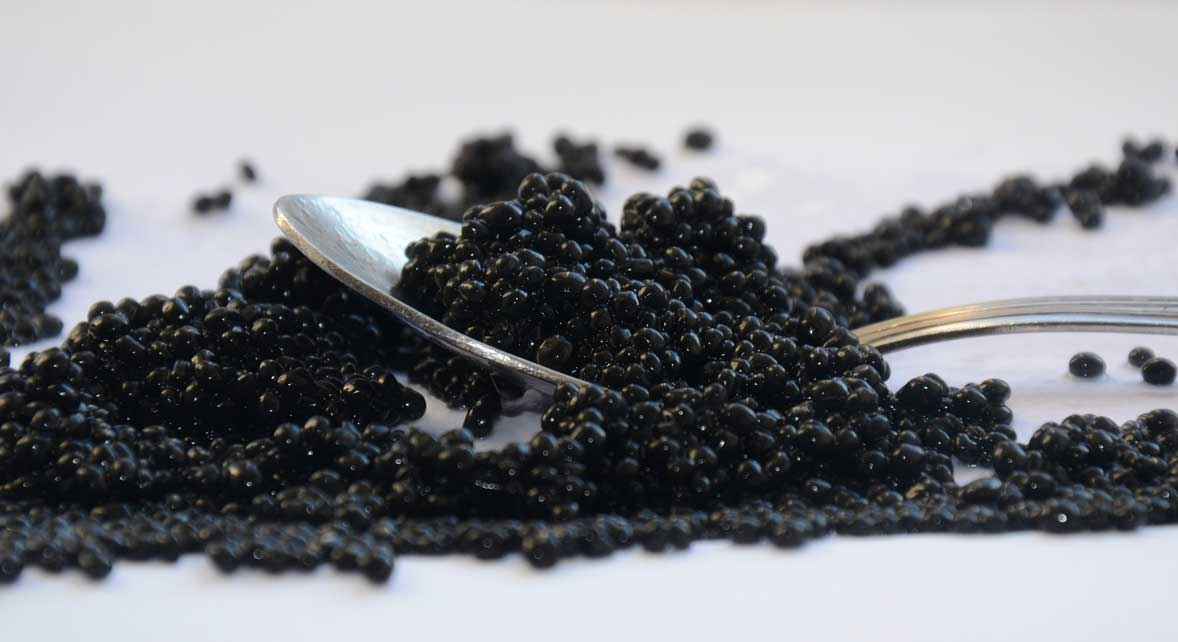
A refined local delicacy
Aquitaine caviar is produced from the eggs of sturgeon raised in the ponds and rivers of south-west France, where the water quality and natural environment provide ideal growing conditions. Two sturgeon species inhabit the region's waterways. The sturio is native to the Adour and Gironde estuaries, while the baerii, originally from Siberia, has adapted perfectly to the Aquitaine ecosystem. It is the baerii that provides the eggs for Aquitaine caviar production.
An industry association oversees farming and production standards to guarantee the quality of this entirely French product. Every fish is born and raised in the south-west, and production takes place on artisanal farms using local labour. The association has introduced a seal of authenticity with a security hologram, allowing consumers to distinguish genuine Aquitaine caviar from imitations. The result is a product widely regarded as among the finest in the world.
Like fine wine, caviar reflects its terroir
Much like wine, caviar is a natural product whose flavour varies according to the selection of the fish, the terroir and the way the eggs are matured. Eggs are rigorously graded by size, texture and colour, and some are aged in their original tins. Aquitaine caviar is distinguished by its delicate notes of iodine and hazelnut, and, as with wine, the personality of the producer comes through in the finished product.
Authentic Aquitaine caviar is available from fine-food shops and directly from the producers. Four local houses are united under the Caviar d'Aquitaine association.
- Kaviar, behind the brands Sturia, Akitania, Ikka and Sturgeon.
- Manufacture Prunier, producing Caviar Prunier.
- Caviar de France, with the Diva and Ebene labels.
- L'Esturgeonniere, producer of Caviar Perlita.
Together, these four houses have drawn up a rigorous set of specifications to guarantee provenance and quality. An application for Protected Geographical Indication (IGP) status is under way.
Tasting tips and derived products
Caviar is at its most expressive when tasted on its own, but it also pairs beautifully with seafood and can be used, much like truffle, to elevate simple dishes such as a baked egg. When tasting caviar from a spoon, mother-of-pearl, ceramic or plastic are the materials of choice, as silver is known to oxidise the eggs and alter the flavour. Professional chefs often place a small quantity on the back of the thumb, allowing body heat to release the aromas just before tasting.
Sturgeon farming for caviar also yields a range of secondary products. The flesh of the sturgeon itself is considered a delicacy, and caviar butter, a preparation that blends sturgeon eggs with high-quality butter, makes a refined accompaniment to bread, soft-boiled eggs or cooked dishes.
Caviar is one facet of a gastronomic lifestyle that draws international buyers to Bordeaux, where period apartments in the city centre and elegant houses with gardens place residents within easy reach of the region's finest producers and restaurants. A full selection of properties is available among the properties for sale in Bordeaux.
For those drawn to the Bordeaux art de vivre, the consultants at BARNES Bordeaux can advise on the neighbourhoods, lifestyle and addresses that match each buyer's expectations, from the initial property valuation to the final signature. The team is available via the contact page.
Enjoyed this guide to Aquitaine caviar? Our newsletter features more Bordeaux lifestyle articles and exclusive property listings before they go online. Sign up here.
All our articles
2026-07-14
Buying a historic monument in Bordeaux and the Gironde: prestige, tax and the duties of ownership
2026-06-26
From ruin to luxury: buying a house or a château to restore in the Gironde
2026-02-23